


Giáo dục tài chính cho học sinh Tiểu học
- 01/03/2019 09:56
- 7 năm trước
Giáo dục tài chính cho học sinh Tiểu học
TỔNG QUAN DỰ ÁN: GIÁO DỤC TÀI CHÍNH CHO HỌC SINH TIỂU HỌC TẠI HUYỆN THANH TRÌ
Dự án "Giáo dục tài chính cho 10 trường tiểu học thuộc huyện Thanh Trì, Hà Nội" là một sáng kiến quan trọng nằm trong khuôn khổ chương trình "Trao quyền cho trẻ em Việt Nam", nhằm thúc đẩy sự phát triển toàn diện của trẻ thông qua việc trang bị kiến thức tài chính cơ bản ngay từ bậc tiểu học.
1. Đơn vị tổ chức và phối hợp
Dự án được thực hiện với sự phối hợp chặt chẽ giữa các bên:
• Quỹ Hỗ trợ Đổi mới Giáo dục Phổ thông Việt Nam (VIGEF).
• Tổ chức JA Việt Nam (Junior Achievement Việt Nam) – thành viên của JA Toàn cầu, tổ chức hàng đầu thế giới về giáo dục kinh doanh và tài chính cho học sinh.
• Trung tâm Hỗ trợ Phụ nữ phòng chống HIV/AIDS và CSSKSS thuộc Hội Liên hiệp Phụ nữ Việt Nam.
• Dự án nhận được sự đồng ý và hỗ trợ từ Sở Giáo dục và Đào tạo Hà Nội.
2. Mục tiêu dự án
Dự án tập trung vào việc:
• Trang bị kiến thức và tư duy cơ bản về nền kinh tế thị trường cho học sinh.
• Giúp trẻ tiếp cận các khái niệm về tiền bạc, hình thành tư duy tài chính từ sớm.
• Rèn luyện kỹ năng sống, góp phần phát triển phẩm chất và năng lực cho học sinh khối lớp 4.
3. Nội dung cốt lõi: Chương trình JA Cha-Ching
Dự án áp dụng chương trình giáo dục tài chính JA Cha-Ching, một chương trình uy tín do Quỹ Prudence khởi xướng và được Tiến sĩ Alice Wilder xây dựng. Nội dung xoay quanh 4 thói quen quản lý tài chính thông minh:
1. Kiếm tiền (Earn).
2. Tiết kiệm (Save).
3. Tiêu tiền (Spend).
4. Quyên góp (Donate).
Thông qua đó, học sinh không chỉ học kiến thức mà còn hình thành thái độ đúng đắn về giá trị của lao động, biết chia sẻ với cộng đồng và có trách nhiệm với bản thân, gia đình.
4. Quy mô và Hình thức triển khai
• Đối tượng: Học sinh lớp 4 tại 10 trường Tiểu học trên địa bàn huyện Thanh Trì, bao gồm: Tam Hiệp, Liên Ninh, Phạm Tu, Hữu Hòa, Ngũ Hiệp, Thị trấn Văn Điển B, Tả Thanh Oai, Tân Triều, Thị trấn Văn Điển A và Ngọc Hồi.
• Quy mô: Tổng cộng 2.343 học sinh tham gia học tập dưới sự dẫn dắt của 20 giáo viên đã qua tập huấn chuyên sâu.
• Quá trình thực hiện:
◦ Tháng 03/2019: Tập huấn cho giáo viên về phương pháp giảng dạy, sử dụng các học liệu sinh động như video ca nhạc, trò chơi và thảo luận nhóm.
◦ Tháng 04 - 05/2019: Triển khai giảng dạy trực tiếp tại các lớp học.
5. Kết quả đạt được
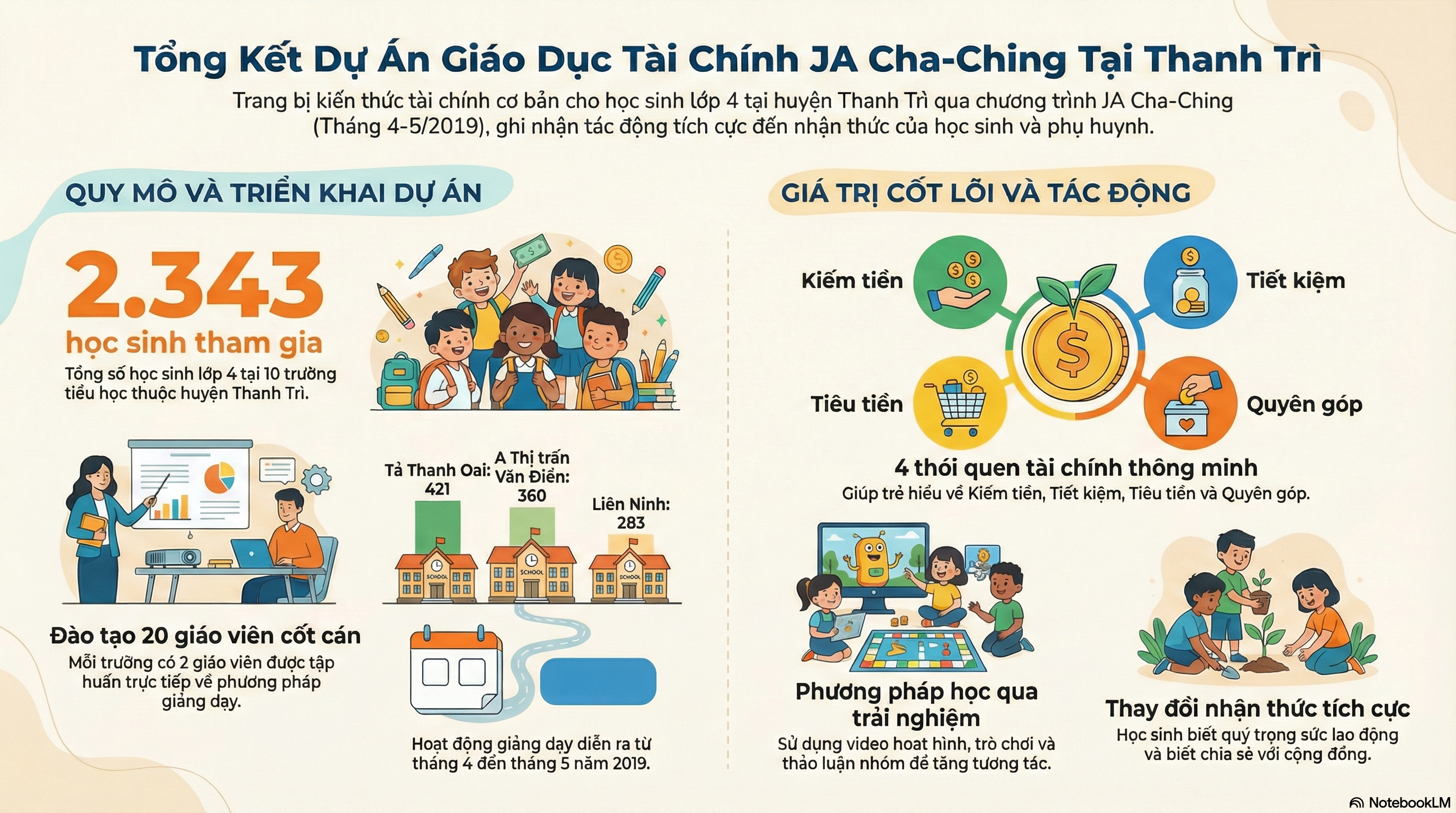
Dự án đã gặt hái được những phản hồi rất tích cực:
• Đối với học sinh: Đa số các em hiểu được giá trị của việc quản lý tiền bạc, hào hứng tham gia các hoạt động trải nghiệm và bắt đầu hình thành thói quen chi tiêu hợp lý.
• Đối với nhà trường và phụ huynh: Nhận được sự ủng hộ cao từ Ban giám hiệu và các bậc phụ huynh. Phương pháp giảng dạy đổi mới, lấy học sinh làm trung tâm đã giúp tiết học trở nên sinh động và hiệu quả.
• Đánh giá chung: Chương trình được nhận định là thiết thực, có khả năng nhân rộng cho các khối lớp khác và các địa phương khác trên toàn quốc.
6. Định hướng tương lai
Dựa trên kết quả triển khai, dự án kiến nghị tiếp tục điều chỉnh chương trình cho phù hợp hơn với thực tế từng địa phương, bổ sung thêm các hoạt động thực hành và có thể mở rộng quy mô đào tạo để nhiều trẻ em Việt Nam được tiếp cận với giáo dục tài chính từ sớm.